Navigational Tools, Products & Services
What you actually get and how will it help you.
Understanding yourself is only the first step – knowing what to do next is where change happens.
The Wayfinding Maps translate insight into movement, giving you clear tools for navigating decisions, relationships, needs, and capacity in real time.
5 Categories make up The Wayfinding Maps:
- Perspective & Meaning-Making Tools
- Relational Navigation Tools
- Needs Identification & Communication Tools
- Developmental & Capacity Tools
- Action & Executive Function Tools
The Wayfinding Maps
Navigational Tools
Perspective & Meaning-Making Tools
This is the interpretation layer – the place where how you understand what’s happening determines what you do next.
Lens Stack – COMING SOON

The Lens Stack helps you examine an experience from multiple angles before reacting to it.
It brings together:
- how an experience is exposed or expressed,
- how reality and context shape what’s actually happening, and
- how observation, consequence, and impact unfold across people and systems.
Together, these lenses show where meaning forms, where distortion creeps in, and where responsibility actually belongs – so you’re not acting from panic, collapse, or self-blame.
This tool supports clearer interpretation and steadier response – helping you choose your next move with awareness instead of urgency.
5R → 5A – COMING SOON
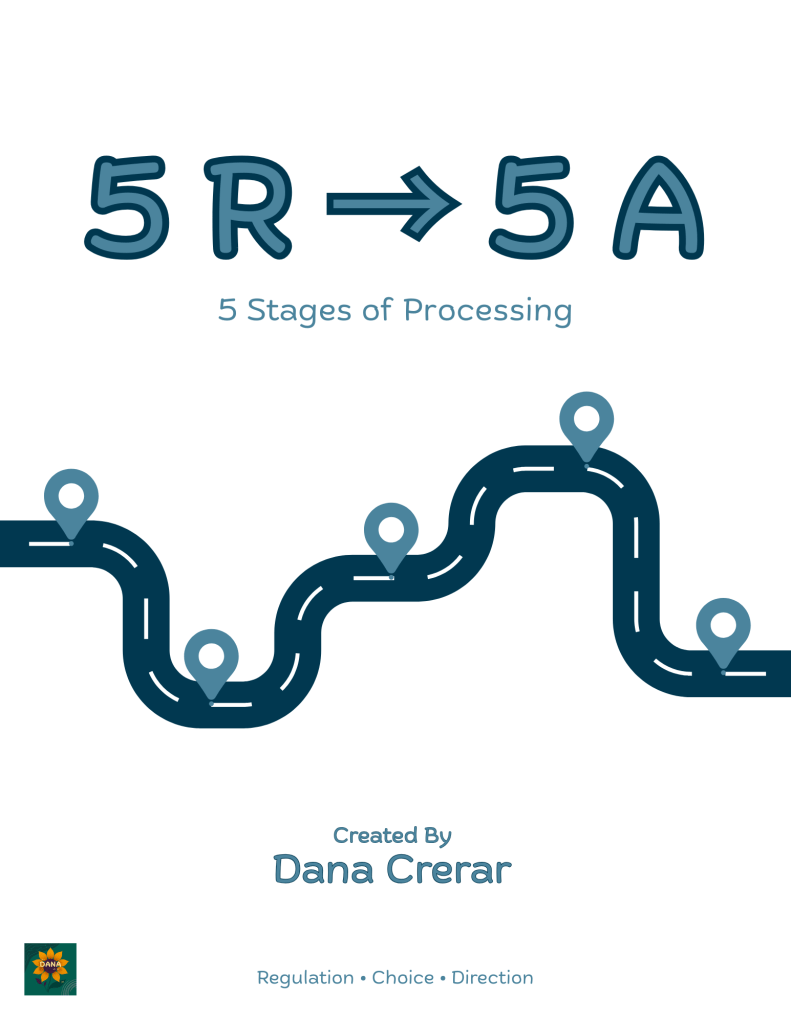
The 5R → 5A framework is a guided movement from reaction into alignment.
It pairs two parallel sequences:
- the 5 R’s – Reflect, Reframe, Respond, Recalibrate, Redirect,
- with the 5 A’s – Acknowledge, Accept, Act, Apply, Align.
Together, these sequences track how an experience is processed internally and how that processing translates into real-world action over time.
This framework helps you slow down without stalling, act without bypassing, and move forward without repeating the same pattern – turning insight into aligned follow-through instead of impulsive reaction.
3 P’s (Pause – Perceive – Proceed) – COMING SOON

The 3 P’s framework is a moment-to-moment navigation tool for interrupting overwhelm and choosing a next step without panic.
It focuses on three internal shifts:
- Pause – creating a brief stop before reaction takes over,
- Perceive – widening awareness to see what’s actually happening inside and around you, and
- Proceed – choosing a supported response or asking for help instead of forcing action.
Together, these steps create space between activation and response – allowing movement that respects capacity, timing, and reality rather than urgency or collapse.
This tool supports steadier decision-making in real time, especially when you feel flooded, frozen, or pressured to act too quickly.
Relational Navigation Tools
This is the navigation layer – where you learn how to move through conflict, misalignment, and repair without losing yourself or escalating harm.
Repair or Release – COMING SOON
These protocols address what happens when connection breaks down – and what’s required for repair, accountability, or separation to be real instead of performative.
It brings together:
- the Relational Repair Protocol – outlining the conditions, signals, and steps required for genuine repair after harm or rupture, and
- the Unrepaired Rift Protocol – clarifying when repair is not possible, not safe, or not mutual, and how unresolved ruptures continue to shape behavior and trust.

Each protocol maps responsibility, capacity, and consent in moments of conflict – helping you distinguish between repair that restores connection and dynamics that repeat harm. This allows you to respond with clarity instead of chasing closure, carrying unearned guilt, or staying stuck in cycles that never resolve.
Needs Identification & Communication Tools
These are the translation tools – the layer that helps you recognize what you actually need and express it clearly, without distortion, collapse, or conflict.
Identify YOUR Needs – COMING SOON
This tool helps you identify what’s actually being requested beneath emotion, behavior, or urgency.
It focuses on:
- distinguishing needs from reactions, strategies, or learned coping responses,
- recognizing unmet needs across emotional, relational, and functional layers, and
- naming what’s present without minimizing, dramatizing, or self-blaming.

By clarifying what you’re responding to internally, this tool helps reduce confusion, reactivity, and misdirected effort – so you can stop solving the wrong problem and start responding to what’s actually needed.
Asking Scripts (Communication Templates) – COMING SOON
This tool provides clear language structures for asking without collapsing, overexplaining, or escalating.
It supports:
- translating identified needs into grounded, direct requests,
- reducing emotional leakage, defensiveness, or ambiguity in communication, and
- maintaining self-respect while inviting collaboration or response.
By giving you reliable phrasing when words feel hard to access, this tool helps you communicate with clarity and steadiness – so your asks are understood without pressure, apology, or self-erasure.

Developmental & Capacity Tools
These are the calibration tools – the layer that helps you recognize which part of you is activated and what level of support or expectation is actually appropriate in the moment.
Navigating Foundational → Formative → Functional Needs – COMING SOON

This tool helps you identify which developmental layer is driving your reaction or shutdown.
It focuses on:
- distinguishing between foundational, formative, and functional needs,
- recognizing when adult-level expectations are being placed on overwhelmed systems, and
- adjusting response and support to match actual capacity.
By clarifying where activation is coming from, this tool helps reduce shame, misinterpretation, and self-pressure – allowing you to respond to yourself with accuracy instead of force.
Generational Attachment Model – COMING SOON
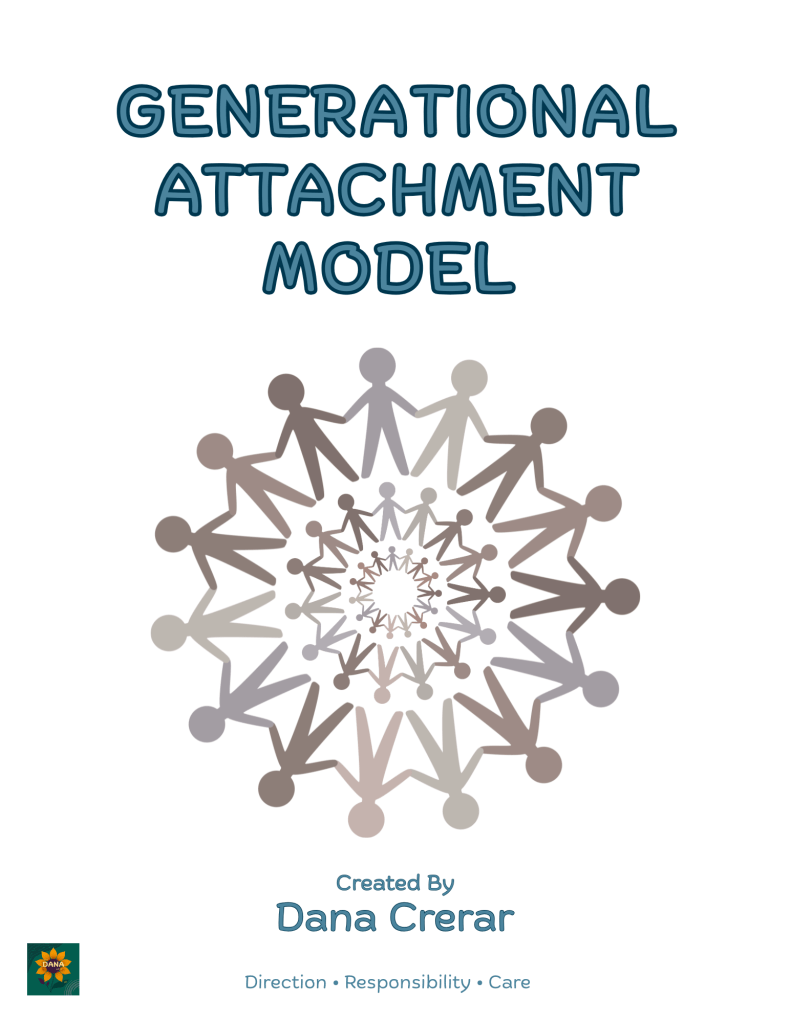
This tool maps how care, responsibility, and emotional labor are meant to flow across generations.
It centers on:
- identifying appropriate directions of care between children, adults, and elders,
- recognizing role reversal, parentification, and misplaced responsibility, and
- separating connection from obligation.
By making the structure of attachment visible, this model helps you release inherited guilt and set boundaries that protect wellbeing without severing clarity or self-respect.
Action & Executive Function Tools
These are the movement tools – the layer that helps you translate intention into action without overwhelm, shutdown, or self-punishment.
CAKE Productivity Model – COMING SOON
This tool breaks action down into the smallest supported steps your system can actually complete.
It focuses on:
- reducing friction at the point of starting,
- matching task size to real-time capacity, and
- building momentum without relying on pressure or perfectionism.
By reshaping how tasks are approached, this model helps you move forward steadily instead of stalling, forcing, or burning out – making progress possible even on low-capacity days.

Where to Start Using These Tools
You don’t need to use every map at once.
Start with the tool that matches what’s happening right now – then build from there.
These tools are designed to work independently, and to layer together as needed.

Choose the Tool That Matches Your Moment
• Start with Perspective & Meaning-Making Tools if you’re stuck in interpretation, second-guessing, or emotional looping
• Start with Relational Navigation Tools if you’re in conflict, rupture, or relational uncertainty
• Start with Needs Identification & Communication Tools if you feel overwhelmed but can’t name what you need or ask for it
• Start with Developmental & Capacity Tools if reactions feel outsized or capacity feels suddenly reduced
• Start with Action & Executive Function Tools if you know what you want but can’t get yourself to move
Want Support While You Navigate?

If you want help choosing, applying, or sequencing these tools in your real life, Deliber8 is where we walk through them together – slowly, clearly, and without pathologizing.
This Is ONLY the Wayfinding Maps Page
Products & Services Page
These tools focus on movement, not mapping.
If you’re looking for:
- the structure of your inner world → Human Topography
- a metaphor-based view of your internal system → AR~V
You’ll find those in their own spaces.
Not Ready to Choose a Tool Yet?
You can explore the ideas through stories and short explanations first.
Continue Your Journey:
The Human Topography
Explore MORE
 DSC Verse